The RIA deal dip is a seller's calendar problem
The 239 deals through September 22 put the year two ahead of last year's record pace and the quarter 19% behind it, a split that should shape a succession timeline.
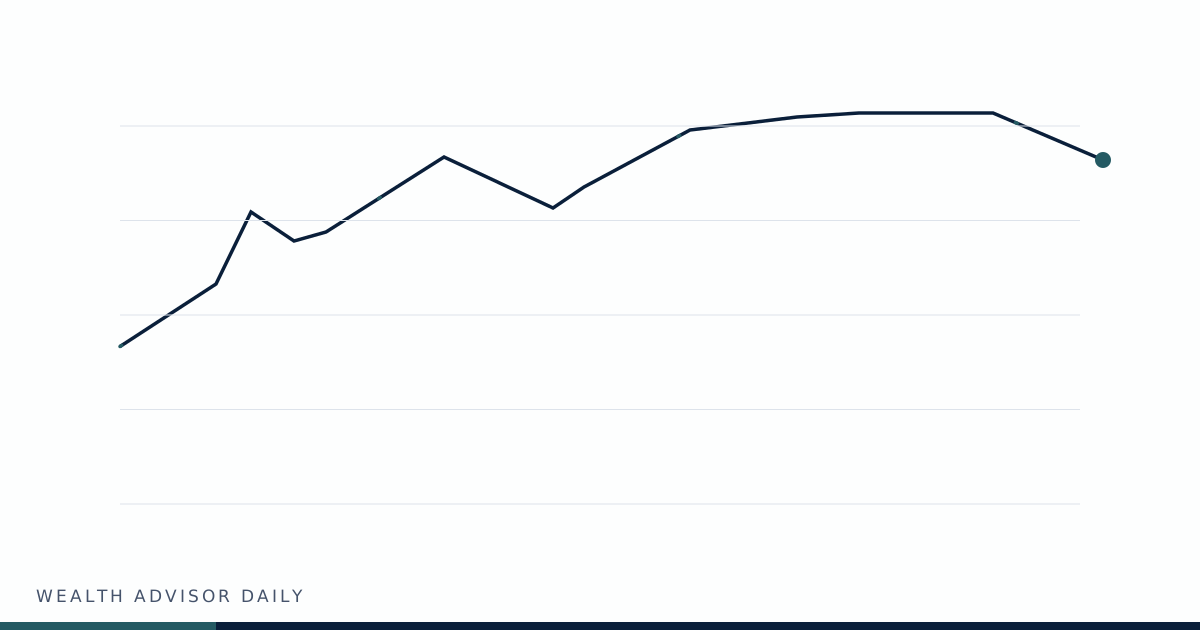
David DeVoe took his firm's own stage at the DeVoe & Company M&A+ Succession Summit in Huntington Beach, California, on Thursday and said the record would not fall. The founder put a number on the softness: 72 RIA deals announced between July 1 and September 22, against 89 over the same stretch last year, a 19% decline that he expects will keep 2026 from surpassing 2025's annual record of 322 transactions. For a seller, the question worth asking is what that 19% is counting.
The year does not read like the quarter: DeVoe's tally through September 22 is 239 transactions, two more than at the same point in 2025, the year that set the record, and the first quarter's 93 deals tied the all-time quarterly high while the second quarter's 74 topped the year-earlier period. What has turned is the sequence—93, then 74, then 72—which is why DeVoe describes a slowdown now running for two straight quarters and calls a new annual high unlikely.
Matching last year's third quarter, a record 93 deals, would take another 21 announcements before September 30, and the shortfall is 17 deals against a quarter that was the high-water mark. Buyers, according to the report, had already begun to believe that valuations had peaked, which says more about buyer psychology than about cleared prices.
The record streak is the frame the coverage will use, a frame about the market's appetite rather than any individual practice's worth. A practice is priced off its revenue mix, client concentration, and whether the next generation is in the building, not off a quarterly count, and the count tells a seller only how many rival books are standing in the same line.
DeVoe's own read is that the cause is timing: owners, he said, delayed decisions to sell while market swings tied to economic and geopolitical uncertainty played out, and he called the dip likely temporary because the drivers behind the long run—succession planning, demand for scale, and continued buyer interest—have not moved. "RIA owners have not abandoned their plans to sell," he said. "They simply delayed the timing."
The bid side offers a sharper explanation, and it is the one a seller should price against: Corey Kupfer, founder and managing partner of the RIA M&A law firm Kupfer PLLC, points to the most active acquirers concentrating on larger transactions—firms already established in a target market are less willing to pay up for a smaller one in it—and notes that average deal size rose in the first half of 2026. "Serial acquirers are doing fewer smaller deals," he said. A falling count and a rising average, taken together, describe a quarter in which the marginal bid for a modest practice thinned while demand for size held.
Haig Ariyan, founder and chief executive of Arax Investment Partners, reads the same selectivity as discipline rather than damage: "And I think that's healthy," he said of buyers growing choosier, adding that volatility did not move the people across his table—"We didn't see a meaningful change in seller interest or activity." Neither man describes a market that stopped buying; they describe one that changed what it will chase.
DeVoe is not the only firm counting: Fidelity Institutional tallied 151 transactions through the end of August, a pace that would leave it short of 2025's record of 276, and though the two counters use different periods and reach different totals, they point the same way at the annual records each set last year.
What the count is counting
Announced deals lag the decisions behind them, and those decisions were made months ago, when the calendar read differently. This publication made the point last week that a soft quarter is a reading on timing, not on value, and today's numbers support it and sharpen it. The count softened where the practice is small and the buyer is a serial acquirer working down a target-market list. It did not soften where the asset is platform-scale or the successor is already inside the firm.
That distinction lands hardest on the founder who has written nothing down. The succession gap is a documentation and pricing failure, and a founder who has named neither a price nor a successor has handed the terms to an outside buyer. A quarter like this raises the cost of that omission, because the buyer still doing fewer small deals is exactly the buyer a plan-less founder ends up across from, negotiating at a moment when the only leverage left is a calendar someone else controls.
There is a version of this that cuts in the seller's favor, and it deserves a test: if 19% fewer practices reached the tape this quarter, a seller entering a process this fall is competing for acquirer attention against fewer comparable books. Attention is the scarce input in a market where the most active buyers are screening for size and market presence, and a small firm with a written plan and a credible internal successor is a different asset from one without either.
The terms that decide whether a sale was worth doing rarely show up in a count of deals; they are the ones set in the letter of intent and the earn-out schedule, negotiated from a position of preparation or from none at all. Our reporting on Sanchez Wealth Management's sale to Modern Wealth described a transaction that prices both a practice and a career, and made the same point from the other direction: the price gets published, and the terms a selling principal should actually be negotiating do not.
DeVoe expects the dip to prove temporary, but waiting for the count to confirm that means starting a process in a quarter that will not be as quiet as this one—and the founders who fare best will be the ones whose price and successor were dated before the recovery rather than after it.
The count softened where the practice is small and the buyer is a serial acquirer working down a target-market list.
Save this analysis and keep the funds you follow together in My Desk.
Sign in to save articles or follow funds. The Exit
The successor is a buyer, and the terms are missing
 The Exit
Buyers still pay up. They want the file first
 The Advisor's Note